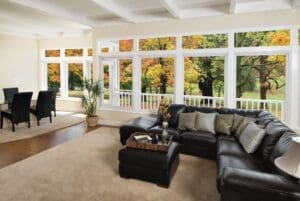

When a window sticks, leaks or fogs up, the hardest part can be explaining what’s wrong. Knowing what each piece is called makes it easier to talk with an installer, compare products and figure out if a repair will do or it’s time to replace. This guide walks through the parts of a window in plain language, with notes on how each one handles Northeastern Wisconsin weather.
The Parts of a Window at a Glance
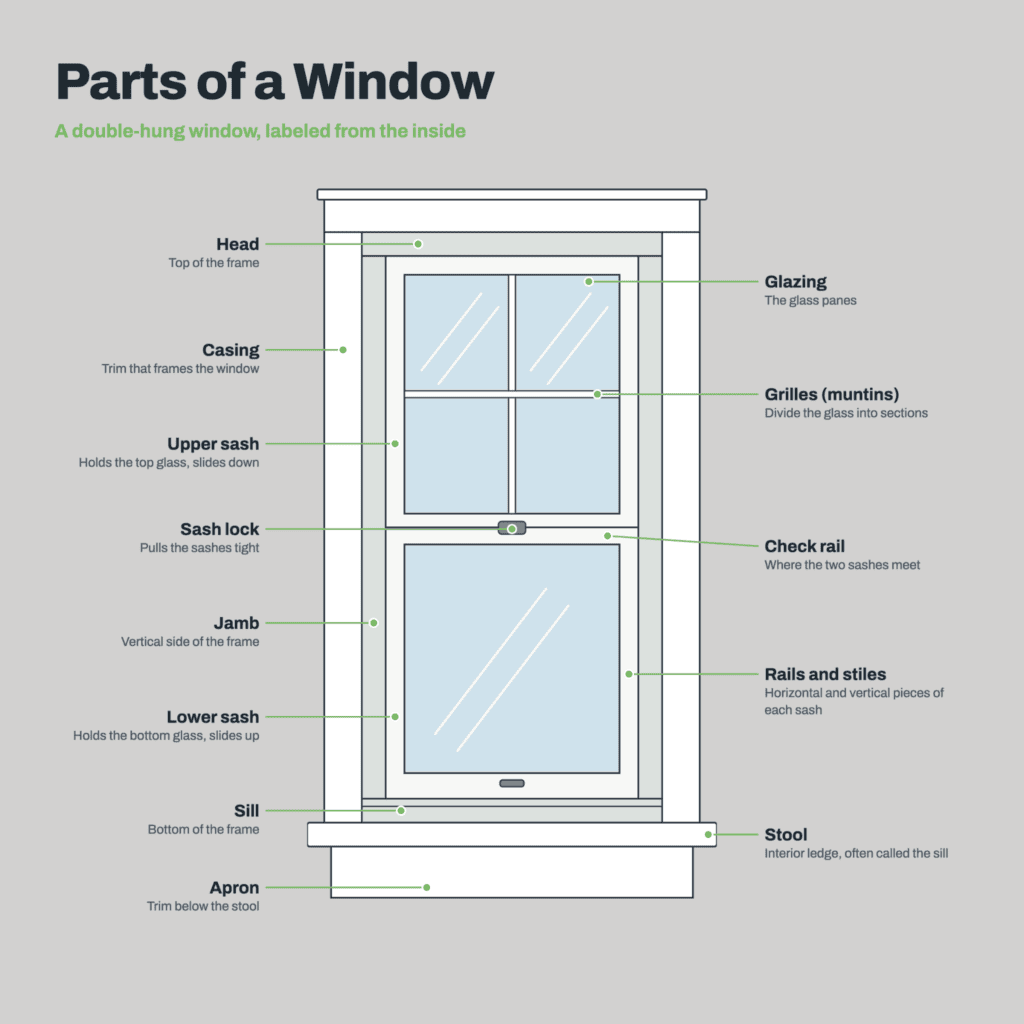
Every window has three main systems: the frame that attaches to your house, the sash that holds the glass, and the glass package itself. Hardware, weatherstripping, grilles and interior trim finish the window. Here’s a quick glossary:
- Frame: the fixed outer box that holds the window in the wall opening
- Head: the top horizontal piece of the frame
- Jambs: the vertical sides of the frame
- Sill: the bottom of the frame, sloped to shed water
- Sash: the part that holds the glass and, on most styles, opens
- Glazing: the glass, usually two or more sealed panes
- Spacer: the strip that separates and seals the panes
- Muntins or grilles: strips that divide the glass into smaller sections
- Mullion: the joint between two windows set side by side
- Check rail: where the two sashes meet on a double-hung window
- Weatherstripping: seals that block air and water between sash and frame
- Casing, stool and apron: the interior trim around the window
The Window Frame
The frame is the stationary structure that holds everything else. It has three named parts.
Head
The head is the top of the frame. On the outside of your home, it often sits under a drip cap or flashing that directs rain away from the opening.
Jambs
The jambs are the two vertical sides of the frame. On a double-hung window, the sashes slide up and down along the jambs.
Sill
The sill is the bottom of the frame. It’s angled slightly outward so rain and melting snow run off instead of pooling. Sills take the most abuse in our climate, where snow sits against them for weeks and freeze-thaw cycles can work moisture into small cracks.
Frame material matters as much as frame shape. The U.S. Department of Energy notes that aluminum frames conduct heat quickly, while composite frames offer strong thermal performance and better resistance to moisture and decay than wood. Renewal by Andersen frames are made from Fibrex® composite material, built for the swings between a July afternoon in Oshkosh and a January night in Wausau.
The Sash
The sash is the frame-within-a-frame that holds the glass. On most windows, the sash is the part that moves. It’s built from horizontal pieces called rails and vertical pieces called stiles.
How the sash moves depends on the style:
- Double-hung: an upper and lower sash that both slide vertically
- Casement: one sash hinged on the side that cranks outward
- Awning: one sash hinged at the top that swings out from the bottom (see our awning vs. casement comparison)
- Sliding: one or more sashes that glide side to side
- Picture: a fixed sash that doesn’t open
Check Rail
On double-hung and sliding windows, the check rail (also called the meeting rail) is where the two sashes overlap. It’s where the sash lock sits, and a tight fit here keeps cold air from slipping through the middle of the window.
The Glass Package
Glazing
Glazing is another word for the window’s glass. Most modern windows use an insulating glass unit, which is two or more panes sealed together with a space between them.
Low-E Coating
Low-E (low-emissivity) coatings are microscopically thin metallic layers on the glass that help keep heat inside in winter and outside in summer. Renewal by Andersen offers four High-Performance Low-E4® glass options, including SmartSun™ glass with HeatLock® technology, which reflects escaping heat back into the room.
Gas Fill
The space between panes is often filled with argon or krypton, inert gases that slow heat transfer better than regular air.
Spacer
The spacer runs around the edge of the glass, holding the panes the right distance apart and sealing in the gas. Renewal by Andersen uses a low-conductivity stainless steel spacer, which resists heat transfer better than aluminum. If a spacer seal breaks, you’ll see fog or moisture trapped between the panes. Our post on window seal failure explains why it happens.
To compare glass performance across brands, look for the National Fenestration Rating Council (NFRC) label, which lists ratings like U-factor and solar heat gain.
Muntins, Grilles and Mullions
These three get mixed up more than any other window parts.
- Muntins are the narrow strips that divide a window into smaller sections of glass. Before large panes were practical, muntins held individual pieces of glass together.
- Grilles are today’s version of muntins. They create the divided-glass look for style, often to match a home’s architecture. Renewal by Andersen offers a wide range of grille patterns, from simple colonial grids to prairie styles.
- Mullions are the structural pieces that join two or more separate windows, like the units in a bay window or a picture window flanked by casements.
The easy way to remember it: muntins divide the glass in one window, and mullions connect separate windows.
Hardware and Weatherstripping
Locks secure the sash and pull it tight against the frame. Cranks, also called operators, open casement and awning windows. Balances are the spring systems inside a double-hung window that hold the sash in place when you lift it.
Weatherstripping fills the small gaps between the sash and the frame. When it wears out, you’ll feel drafts. If you’re noticing cold spots this fall, our guide on keeping cold air from coming through windows can help you track down the source.
Interior Trim and Screens
- Casing is the decorative trim that frames the window on your interior wall.
- Stool is the flat interior ledge many people call the windowsill. Technically, the sill is part of the frame outside.
- Apron is the trim piece directly below the stool.
- Screens keep insects out when the window is open. Renewal by Andersen’s TruScene® insect screens are designed to let in more fresh air and a clearer view.
Which Window Parts Wear Out First?
In Greater Wisconsin homes, the parts that usually fail first are weatherstripping, glass seals and sills. Watch for drafts near closed windows, fog between panes, soft or peeling wood on the sill, and sashes that won’t stay open. One worn part can often be repaired. When several show up at once, it may be time to look at whether to repair or replace your windows.
Frequently Asked Questions
What is the bottom part of a window called?
The bottom of the window frame is the sill. The interior ledge above it is called the stool.
What are the sides of a window frame called?
The vertical sides of a window frame are called jambs.
What is a window sash?
The sash is the part of the window that holds the glass. On most window styles, it’s also the part that opens and closes.
What’s the difference between a muntin and a mullion?
A muntin divides the glass within a single window. A mullion joins two or more separate windows together.
Talk Window Parts With a Local Expert
From Green Bay and Appleton to Stevens Point, Sheboygan and Minocqua, RBA of Greater Wisconsin helps homeowners choose the right frame, glass, grilles and hardware for every room. Try our window and door visualizer to see options on your own home, or schedule an in-home consultation with our design team.