
Most homeowners spend a lot of time thinking about window locks, alarm systems, and smart cameras. The front door? It tends to get overlooked or treated as more of a design decision than a safety one.
But here’s the reality: about 34 percent of home break-ins happen through the front door. Burglars are not looking for a challenge. They are looking for the fastest, easiest way in, and a weak entry door is exactly that.
So yes, your front door absolutely affects your home’s security. Here is what actually matters.
The Door Material Makes a Difference
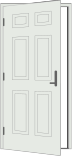
Not all doors are built the same. Hollow-core doors, which are common in older homes, offer very little resistance to forced entry. Fiberglass doors are durable and low-maintenance, and they can mimic the look of solid wood while offering superior resistance to dents, scratches, and moisture. Steel doors are another strong option, especially when paired with a reinforced frame.
The door itself is only part of the equation, though. A solid door in a weak frame is not much better than a hollow one. The condition of your existing door frame matters as much as the door itself.
Deadbolts, Locks, and What to Look For
A basic knob lock is not enough on its own. Deadbolts are the standard for a reason, but the quality and installation matter. Look for a deadbolt with a bolt that extends at least one inch into the door frame. Pair this with a reinforced strike plate secured with long screws that reach the wall stud, not just the trim.
Smart door locks can connect to home automation systems, integrate with cameras, and alert mobile devices if someone tries to force entry. These systems can also provide one-time access codes for guests or service workers, so you don’t have to worry about spare keys ending up in the wrong hands. For households that are frequently coming and going, or that rely on service providers, that kind of access control is genuinely useful.
The Frame and Hinges Matter Too
A door is only as strong as what it’s attached to. Exposed hinges on an outward-swinging door are a real vulnerability, since the pins can be knocked out. Hinge bolts or security studs can address this. Look for tamper-resistant hinges and multi-point locking systems when shopping for a replacement door, since these features distribute the force of an attempted kick-in across a larger area rather than concentrating it at one point.
Glass Near the Door
Sidelights and decorative glass panels can add a lot of visual appeal to an entry, but they also create an opportunity. If a pane of glass is close enough to the lock that someone could break it and reach through, that’s a weakness worth addressing. Impact-resistant glass and laminated options offer more protection than standard glass, and window film can be added to existing panes as a lower-lift upgrade.
Lighting and Visibility
Security is not just about the door itself. Adequate lighting around your entry deters opportunistic break-ins, since most burglars prefer not to be seen. A well-lit entryway, combined with a video doorbell or camera, creates a meaningful deterrent before anyone even gets to the door.
What This Has to Do With Your Windows
A new front door is one of the most impactful upgrades a homeowner can make. However, If your door is new and weather-sealed but your windows are drafty, single-pane, or aging, you are trading one vulnerability for another. The same logic that applies to front door construction, solid materials, good seals, durable hardware, applies to your windows as well.
At Renewal by Andersen of Greater Wisconsin, we understand how important home security is. If you’re in the process of evaluating your home’s entry points, comfort, and efficiency, we’re happy to help. Schedule a free consultation!